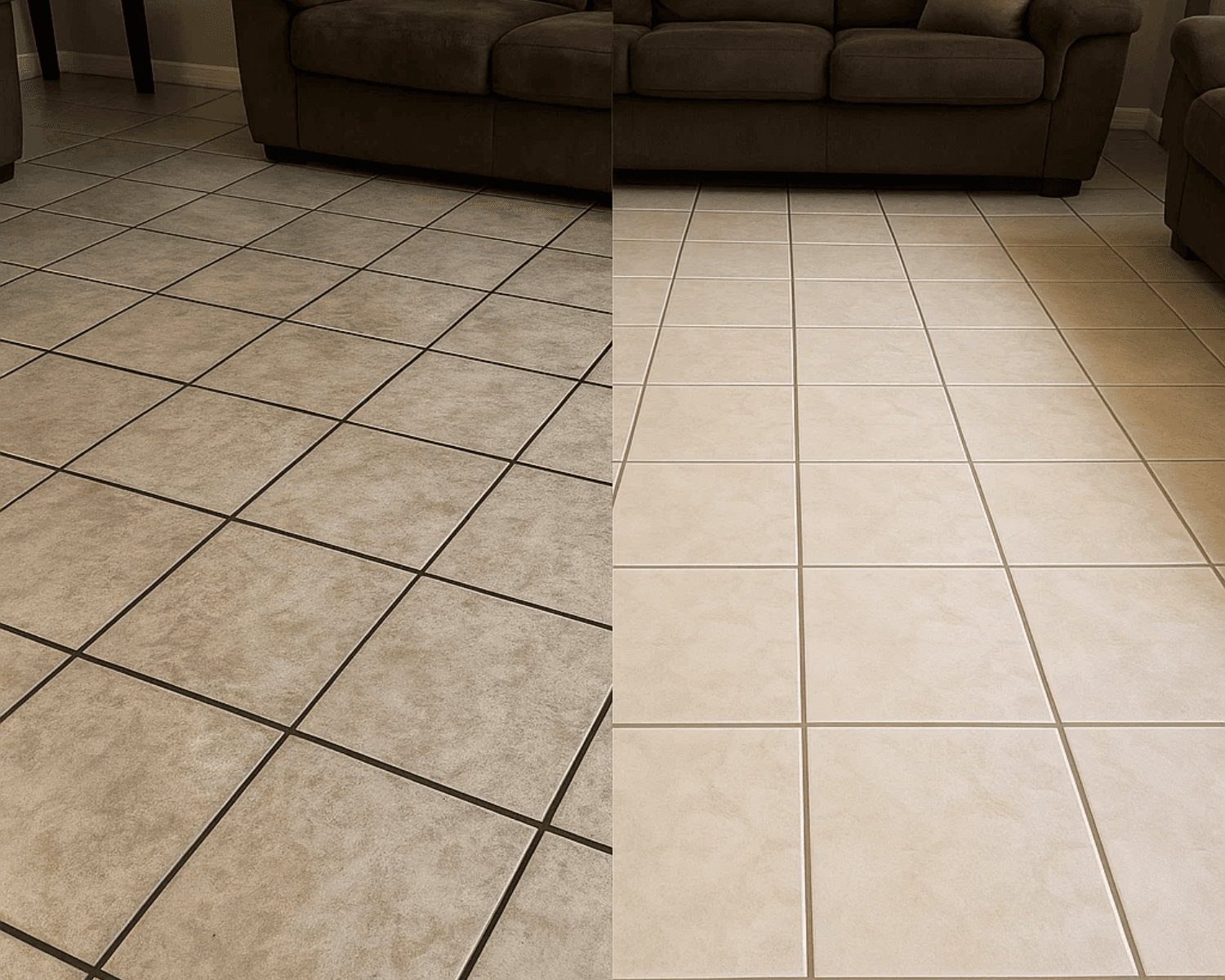
The tile in your master bath was bright white when the builder installed it. The grout was a clean, consistent gray. That was three years ago. Now the grout between the shower floor tiles has darkened. The kitchen floor grout has a brownish cast that mopping makes worse, not better. The entryway tile looks dull even right after you clean it.
This is one of the most common calls we get from Nolensville homeowners. The houses are new. The tile is in perfect condition. But grout starts absorbing contamination from day one, and within a few years it looks like it belongs in a twenty-year-old house. Mopping pushes dirty water into the pores. Soap-based cleaners leave a film that traps new soil against the surface. The grout gets progressively darker and no amount of scrubbing reverses it.
Safe-Dry of Nolensville cleans tile and grout with an eco-friendly scrub-and-rinse process: a solution chosen for your tile, driven into the grout pores by a rotary floor buffer, then rinsed and mopped away along with all the contamination it dissolved. No bleach. No harsh acids. No chlorine fumes filling your bathroom.
Our 5-Step Tile and Grout Cleaning Process
1. Surface and material identification. We check what's on your floors and walls before we start. Ceramic, porcelain, natural stone (marble, travertine, slate), or large-format tile. The grout type matters too: sanded versus unsanded, sealed versus unsealed, epoxy versus cement-based. Natural stone in particular requires adjusted chemistry because acid-based cleaners etch marble and travertine on contact. We match our approach to your specific materials.
2. Non-toxic pre-treatment. A biodegradable cleaning solution goes into the grout lines and across the tile surface. It penetrates the porous grout and starts dissolving the trapped dirt, grease, soap scum, and mildew that mopping has been pushing deeper for years. No acid fumes. No bleach smell. Safe to breathe while we work.
3. Rotary buffer scrubbing. A floor buffer drives the solution into grout pores at a level hand-scrubbing can't reach. Its brush drops into the recessed joint itself, exactly the spot a flat mop passes right over, and loosens the compacted soil that's been building up since the tile was installed. The brush is grout-safe. It cleans without grinding the grout surface down.
4. Rinse and clean-water mop. We rinse the floor and mop away the dirty solution along with everything the buffer broke loose, leaving the surface clean without puddles or soapy residue. This is where the real color difference shows up. Most homeowners see the original grout color return during this step.
5. Drying and final inspection. The floor is typically dry and ready for traffic within an hour. We check every section with you and address anything that doesn't meet expectations.
Why New Tile Gets Dirty Grout So Fast
Builders in Nolensville almost never seal grout after installation. They lay the tile, grout the joints, and move on to the next house in the subdivision. That means your grout has been absorbing contaminants from the very first mop job.
Cement-based grout is porous by nature. Every liquid that contacts it wicks into those pores: mop water, splashed coffee, shower spray, soap residue. Over months, those pores fill with a compressed layer of mineral deposits, dissolved soil, soap film, and organic material. The grout darkens progressively until it looks permanently stained.
In bathrooms, the situation compounds. Daily shower water contains dissolved minerals from Nolensville's municipal supply. Those minerals deposit in grout lines and create a scale that traps soap scum and body oils. Combine that with the humidity of a bathroom (warm, damp, enclosed), and you've got conditions perfect for mold colonization in the upper layer of grout.
Kitchen floors face grease. Cooking oils become airborne during stovetop use. They settle on tile and get walked into grout lines. That grease film traps every other particle that crosses it: dust, crumbs, tracked-in soil. The result is a brownish discoloration that no household mop reaches.
Scrubbing harder by hand won't fix it. The pores need a solution that dissolves what's packed into them, a buffer with enough muscle to break it free, and a thorough rinse and mop-off to carry the whole mess out of the house.
Go Deeper on Grout
Homeowners who like to research before booking can spend some time in our tile and grout knowledge base, the national Safe-Dry resource on everything tile. It explains why grout in a three-year-old house can look twenty, how porcelain and ceramic respond differently to cleaning, and what that stubborn haze on new tile actually is.
Rooms We Commonly Treat
- Master bathrooms — shower floors, tub surrounds, vanity backsplashes
- Kitchen floors — especially around the stove, sink, and refrigerator
- Entryways and mudrooms — first to get dirty, hardest to keep clean
- Laundry rooms — humidity plus foot traffic
- Guest bathrooms — often neglected between uses, grout darkens unnoticed
- Garage entries — the transition zone where outdoor soil meets indoor flooring
Keeping It Clean Afterward
Once the pores are empty, upkeep gets a lot easier. Sweep or vacuum up grit before it gets ground in, mop with clean water and a neutral cleaner, and skip the soap-heavy products that leave a film for new soil to stick to.
Change the mop water when it turns gray. Wringing dirty water back over freshly cleaned grout is how the lines start creeping dark again, and it's the single habit that undoes a professional cleaning fastest.
The Safe-Dry Advantage
Longer-lasting results. Grout with emptied pores resoils slowly. With the packed grime gone, ordinary upkeep holds the color for months on end.
Dry in about an hour. Our rinse leaves very little water on the floor, so it dries far faster than a conventional wet cleaning. Back on the floor the same day.
100% satisfaction guarantee. Every job backed by our full promise.
Our technicians are certified, insured, and experienced with every tile and grout type we encounter in Nolensville's newer construction. We serve Nolensville, Arrington, College Grove, Thompson's Station, and surrounding Williamson County. Many homeowners bundle tile work with hardwood floor cleaning or carpet cleaning to refresh every floor surface in one visit.
Frequently Asked Questions
How often does tile and grout need professional cleaning?
Every 12 to 18 months for most homes. Bathrooms with daily shower use and kitchens with heavy cooking may benefit from annual treatment. Regular sweeping between visits keeps grit from grinding in and stretches that interval.
Can you fix grout that's turned black from mold?
Yes. Our cleaning process dissolves mold in grout lines without harsh chemicals, and the buffer scrubs it out of the joint where it roots. For grout with severe structural deterioration from long-term mold exposure, regrouting may be the better option, and we'll tell you during inspection.
Is this safe on natural stone tile?
Yes. We identify your stone type (marble, travertine, slate, limestone) before selecting products. No acids, no etching agents, no chemicals that dull polished stone. Natural stone gets a specialized approach that cleans without damaging the surface.
Will you clean the grout in my shower walls and floor?
Yes. We clean all tile and grout surfaces: floors, walls, shower enclosures, backsplashes, and tub surrounds. Vertical surfaces get the same pre-treatment and scrubbing attention, with hand tools standing in where the floor buffer can't go.
Book Your Tile and Grout Cleaning
Call 615-813-7702 or schedule online. We serve Nolensville, Arrington, College Grove, Thompson's Station, and all areas on our service map. Check the coupons page for current offers.