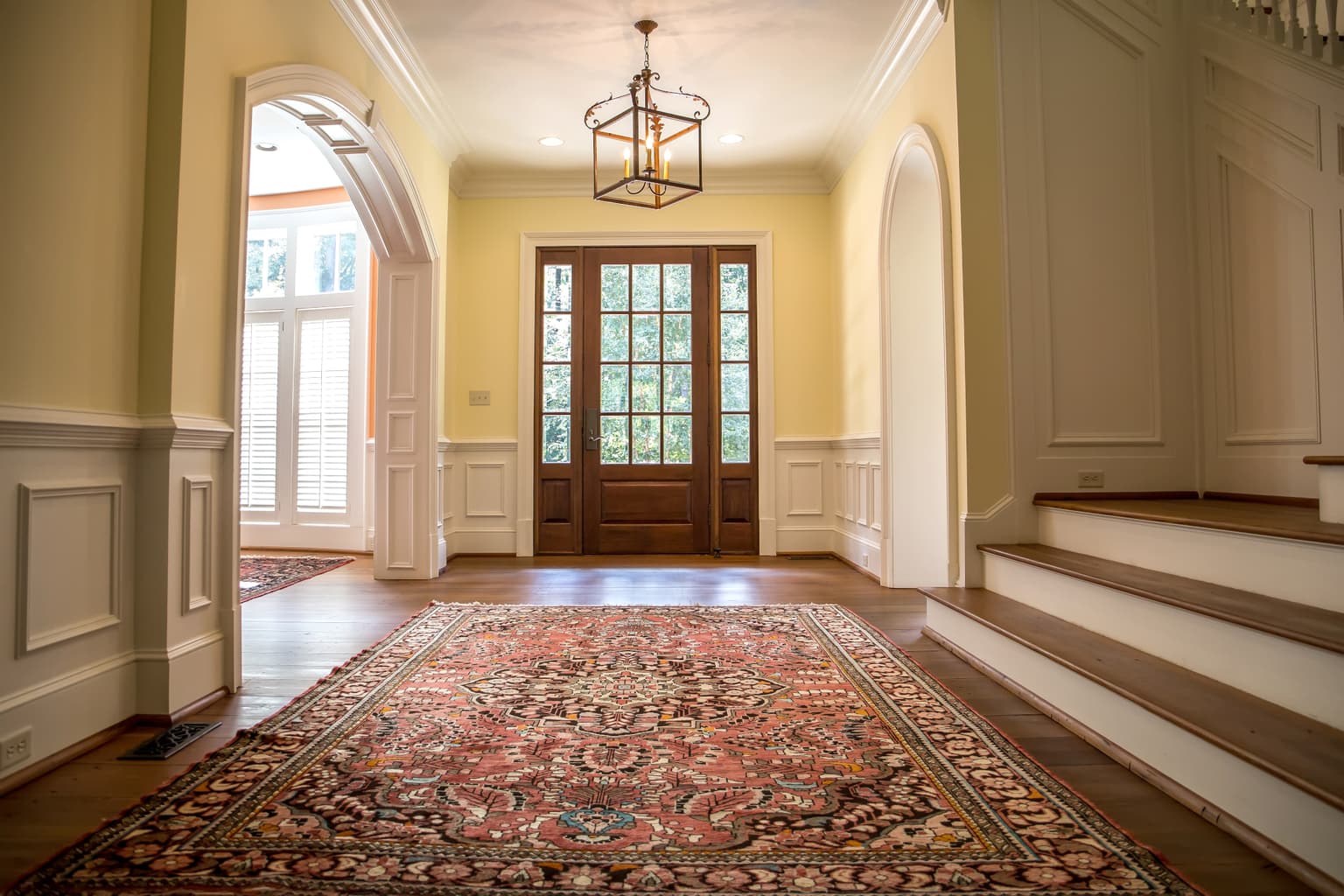
Nolensville families are investing in their homes. With a median household income above $177,000, many homeowners here are buying quality pieces they intend to keep for decades: hand-knotted Persians in the formal living room, silk Tabriz rugs in the study, antique Caucasian runners in the hallway. These aren't disposable floor coverings. They're heirloom-quality textiles, and they demand cleaning methods built specifically for their materials.
The wrong approach destroys value fast. Hot water bleeds vegetable dyes. Detergent leaves a film that dulls natural wool. High-pressure extraction stretches hand-tied knots. We've seen rugs come into our shop that were worth thousands before someone ran a rental steam cleaner over them.
Safe-Dry of Nolensville uses a carbonated, low-moisture process designed from the ground up for delicate natural fibers. No soap. No excessive water. No heat that shrinks wool or weakens silk foundations. We've been trusted with valuable rugs across Middle Tennessee for over 30 years.
Our 6-Step Oriental Rug Cleaning Process
1. Fiber and dye analysis. We start by identifying exactly what we're working with. Hand-knotted versus hand-tufted versus machine reproduction. Wool pile, silk pile, cotton foundation, or combination. Natural vegetable dyes versus synthetic chrome dyes. Vintage pieces from the early 1900s get a fundamentally different treatment than a modern Indian reproduction. We run colorfastness testing in an inconspicuous area to confirm how the dyes respond to moisture.
2. Foundation dusting. This is the step most people skip at home, and it's the one that prevents the most long-term damage. A rug walked on for even a year accumulates pounds of fine grit deep in the pile base. That grit grinds against the wool every time weight passes over it. We use professional equipment to vibrate that debris loose and extract it dry. Removing it before cleaning prevents it from being ground deeper during the wet phase.
3. Stain and contamination treatment. We address each stain individually based on its composition. Red wine, coffee, pet accidents, and food spills each require specific chemistry. Everything we apply is formulated for natural fibers: no bleach, no oxidizers that would strip color, no agents that compromise wool lanolin. Pet areas receive enzyme treatments that break down organic material without affecting dyes.
4. Carbonated cleaning. Millions of tiny bubbles penetrate the pile and bond to soil particles, floating them to the surface. This is where our method truly separates from conventional cleaning. The carbonation provides cleaning power without water volume. We use about one-tenth the moisture of steam extraction. For wool and silk, that minimal moisture is the difference between a successful cleaning and irreversible damage — shrinkage, dye migration, or foundation rot.
5. Controlled extraction and drying. Gentle but thorough extraction pulls contaminated moisture from the rug without the high-pressure force that stretches delicate fibers. Because we started with so little water, the rug reaches a safe moisture level quickly. Typical dry time is about an hour for in-home service.
6. Pile setting and final inspection. We groom the pile to lay properly according to the rug's nap direction, inspect the fringe and edges, and review results with you. For rugs cleaned in our facility, we photograph before and after so you can see the difference at pickup.
Why Oriental Rugs Demand Specialized Care
A hand-knotted oriental rug represents hundreds (sometimes thousands) of hours of skilled labor. The wool is hand-spun, the dyes are often plant-derived, and the structure relies on tension between warp and weft threads that can be disrupted by aggressive handling.
Standard cleaning methods pose real risks:
- Hot water causes wool to felt and shrink. Natural dyes bleed when saturated.
- Detergent strips the lanolin oils that keep wool fibers supple. The rug becomes brittle.
- High-pressure extraction pulls knots loose, especially on older pieces where the foundation cotton has aged.
- Extended moisture allows mold to colonize the cotton foundation where you can't see it.
Our carbonated approach eliminates all four of those risks. Minimal water. No soap. Gentle extraction. Fast drying.
Beyond preservation, there's a health component. Oriental rugs function as filters in your home, trapping pollen, dust mites, pet dander, and bacteria in their dense pile. Once a rug reaches capacity, foot traffic pushes those allergens back into the air. In Nolensville, where spring pollen from cedar, oak, and hickory blankets everything from February through May, that trapped pollen load builds faster than you'd expect.
In-Home and In-Plant Options
Most oriental rugs can be cleaned right in your home. We bring everything needed and the rug stays where it is. For pieces that need deeper restoration — heavy pet contamination, old staining, moth damage, fringe repair, or dye stabilization — we offer in-plant service with careful pickup and delivery. Turnaround runs three to five business days depending on the work involved.
Either way, you don't need to roll up a heavy rug and transport it yourself.
The Safe-Dry Advantage
Stays vivid longer. No detergent residue means fibers don't attract new soil. Colors stay true and bright between cleanings.
Dry in about an hour. Our low-moisture method dries up to 8x faster than conventional cleaning. Minimal time at higher moisture means minimal risk.
100% satisfaction guarantee. Every rug cleaning is backed by our full promise. If the rug doesn't look right, we come back.
Our technicians are certified, insured, and specifically trained on natural-fiber textiles. They understand dye chemistry, fiber characteristics, and the structural differences between a 100-year-old Heriz and a new production Oushak. We serve Nolensville, Arrington, College Grove, Thompson's Station, and surrounding Williamson County. Many customers bundle oriental rug service with carpet cleaning or upholstery cleaning on the same visit.
Frequently Asked Questions
How do I know if my rug is a real oriental or a reproduction?
Flip it over. A hand-knotted rug shows individual knots on the back, and the pattern is visible from both sides. Machine-made reproductions have a uniform backing. Either way, we clean both types. We just adjust our method for the construction.
How often should oriental rugs be professionally cleaned?
Every 12 to 18 months for rugs in active living spaces. If the rug is in a low-traffic room, every two years may be sufficient. Homes with pets or young children benefit from a shorter cycle — about once a year.
Can you remove pet urine from an oriental rug without damaging the dyes?
Yes. Our enzyme treatments break down organic contamination without affecting natural or synthetic dyes. We test colorfastness first to confirm the rug's stability, then treat the affected areas with fiber-safe solutions. For heavy saturation, in-plant treatment gives us the most control.
Will the fringe get cleaned too?
Yes. We clean fringe as part of the process. For fringe that's heavily stained or damaged, we can discuss hand-washing or repair options during the inspection.
What's the difference between this and your regular area rug cleaning?
Our area rug cleaning service handles all rug types. The oriental rug service adds enhanced dye testing, gentler extraction pressure, specialized natural-fiber pre-treatments, and more time per square foot. It's designed for pieces where the materials and construction demand extra caution.
Book Your Oriental Rug Cleaning
Call 615-813-7702 or schedule online. We serve Nolensville, Arrington, College Grove, Thompson's Station, and surrounding areas in Williamson County. Check the coupons page for current offers.